Why We Buy: The Psychology of Personality and Consumer Choice
Sep 1, 2025
When you grab a coffee at Starbucks, upgrade your iPhone, or slip on your Nikes, you’re not just buying products. You’re buying into an identity. Modern marketing is no longer about features or price alone, it’s about personality congruence.
Consumers prefer brands that mirror who they are, who they want to be, or how they want others to see them. This isn’t just theory. Research shows that the closer a brand’s personality aligns with a consumer’s self-image, the stronger their loyalty becomes

Freud in the Aisle: The Subconscious at Work
Sigmund Freud argued that our behavior is driven by unconscious forces the id (instinct), superego (morality), and ego (balance). Applied to shopping, purchases often act as symbols for hidden desires.Apple taps into the ego’s need for self-expression and balance between function and aspiration. The sleek design and “Think Different” ethos signal individuality and intelligence, appealing to both rational and emotional drives.Luxury brands like Rolex feed the id’s desire for status and instant gratification, wearing one satisfies deep, even unspoken, cravings for recognition.Marketers use this Freudian lens to frame products as more than tools. They’re gateways to fulfilling unconscious needs.
Neo-Freudians: Products as Social Tools
Karen Horney expanded Freud’s ideas, suggesting people cope with anxiety in three ways: by moving toward others (compliant), against others (aggressive), or away from others (detached). These patterns map neatly to buying behavior:
Compliant consumers crave acceptance. Think Dove’s “Real Beauty” campaign, which emphasizes authenticity and social approval.
Aggressive consumers seek admiration. Adidas and Axe/Lynx market dominance, power, and attractiveness, positioning their users as winners.
Detached consumers value independence. Patagonia for instance, appeals to those who want to disconnect from mainstream consumerism while still aligning with personal values.
Advertising, then, becomes a way of soothing social anxieties, promising love, admiration, or freedom.

Traits that Drive Shopping
Trait theory focuses on measurable, stable characteristics that shape how people interact with brands. Some key traits in consumer research include:
Consumer Innovativeness: Early adopters rush to buy the latest tech. Tesla’s fans often display this trait, eager to embrace new technology.
Need for Uniqueness: People who resist conformity love brands like Supreme, which thrive on exclusivity and limited drops.
Optimum Stimulation Level (OSL): Thrill-seekers gravitate toward brands like Red Bull, which align with high-energy, adventurous lifestyles.
Consumer Ethnocentrism: “Buy American” campaigns play directly to this trait, making Ford’s Made in America messaging resonate with loyalists.
Marketers who segment audiences by traits, rather than just demographics, can design sharper campaigns that actually fit the consumer’s mindset.
The Self-Concept Connection
Your self-concept is how you see yourself, or how you want to be seen. It comes in different flavors: the actual self, ideal self, social self, and situational self
Brands often act as mirrors to these selves: Nike’s “Just Do It” connects with the ideal self, the athlete you aspire to be. Starbucks caters to the social self, signaling that you’re modern, connected, and part of a lifestyle tribe. Levi’s reflects the actual self for many, emphasizing authenticity and timelessness.
Studies confirm that the closer the brand’s personality fits with one of these self-concepts, the stronger the consumer’s attachment
The Congruence Principle: Why We Buy Who We Are
The central finding across decades of research is the congruence principle: consumers prefer brands whose personalities match their own. A 2015 study found that congruence between consumer and brand personality directly increased brand preference and loyalty (Țichindelean, 2015). Another study showed that consumers can even shape a brand’s perceived personality, projecting their own traits onto it (Phau & Lau, 2000).This explains why brand communities (think Apple fans or Harley-Davidson riders) feel almost cult-like, people see themselves in the brand, and the brand reinforces their identity.
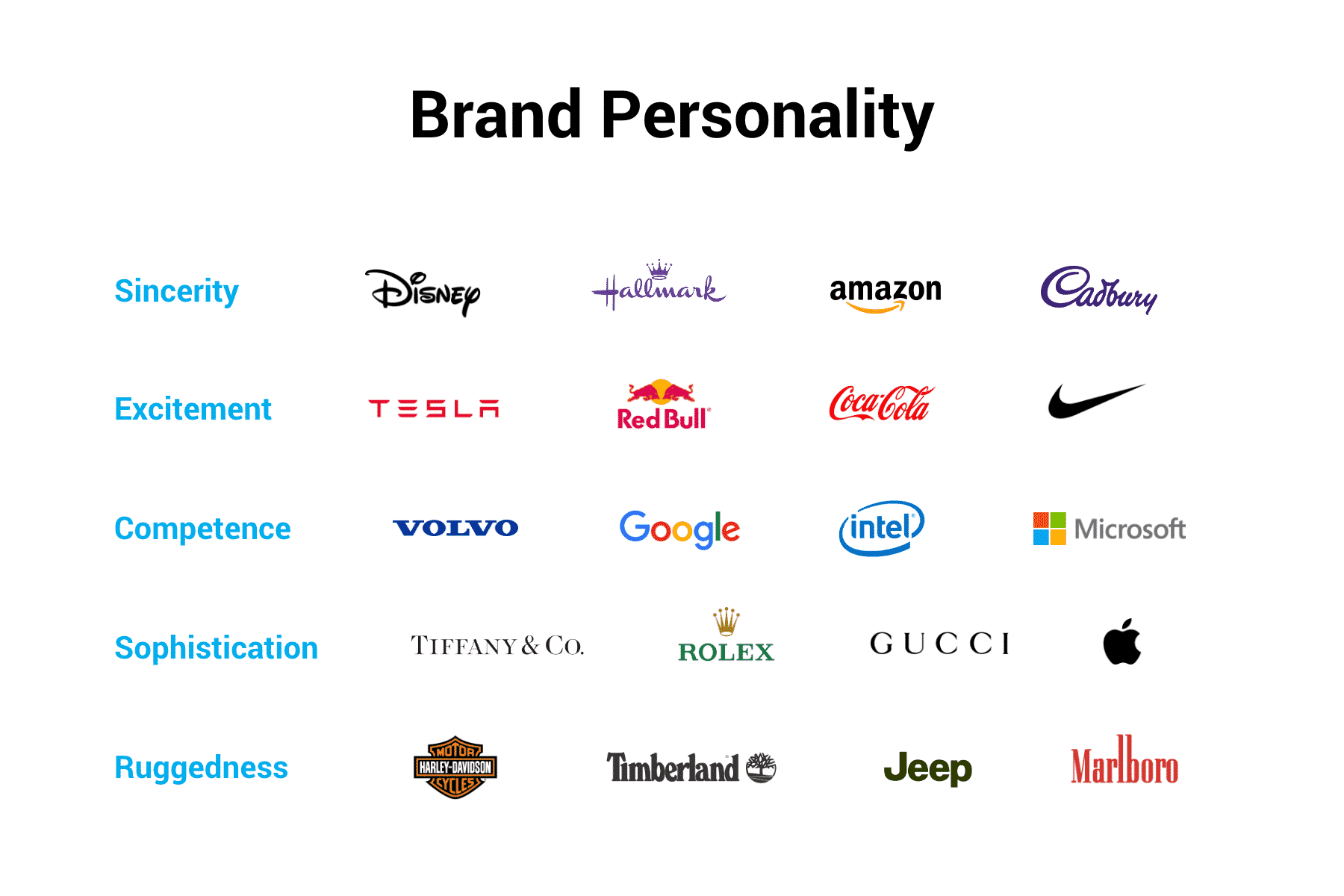
Aaker’s Five Dimensions: A Playbook for Brands
- Dove scores high on sincerity (honest, wholesome).
- Red Bull embodies excitement (daring, spirited).
- IBM represents competence (reliable, intelligent).
- Apple leans into sophistication (chic, stylish).
- Harley-Davidson owns ruggedness (tough, outdoorsy).
Lessons for Marketers
Focus on Congruence: Aim for alignment between brand personality and consumer self-image.
Pick a Primary Trait: Be the master of one, not the jack of all. Nike doesn’t try to be sincere and sophisticated, it nails excitement and ruggedness.
Go Beyond Demographics: Segment by personality traits like innovativeness or need for uniqueness.
Leverage Emotional Symbolism: Products aren’t just functional. They’re identity markers. Sell the symbol, not just the service.